Self-Paced AI Courses for Kids: Why Flexible Learning Is the Future of Digital Education

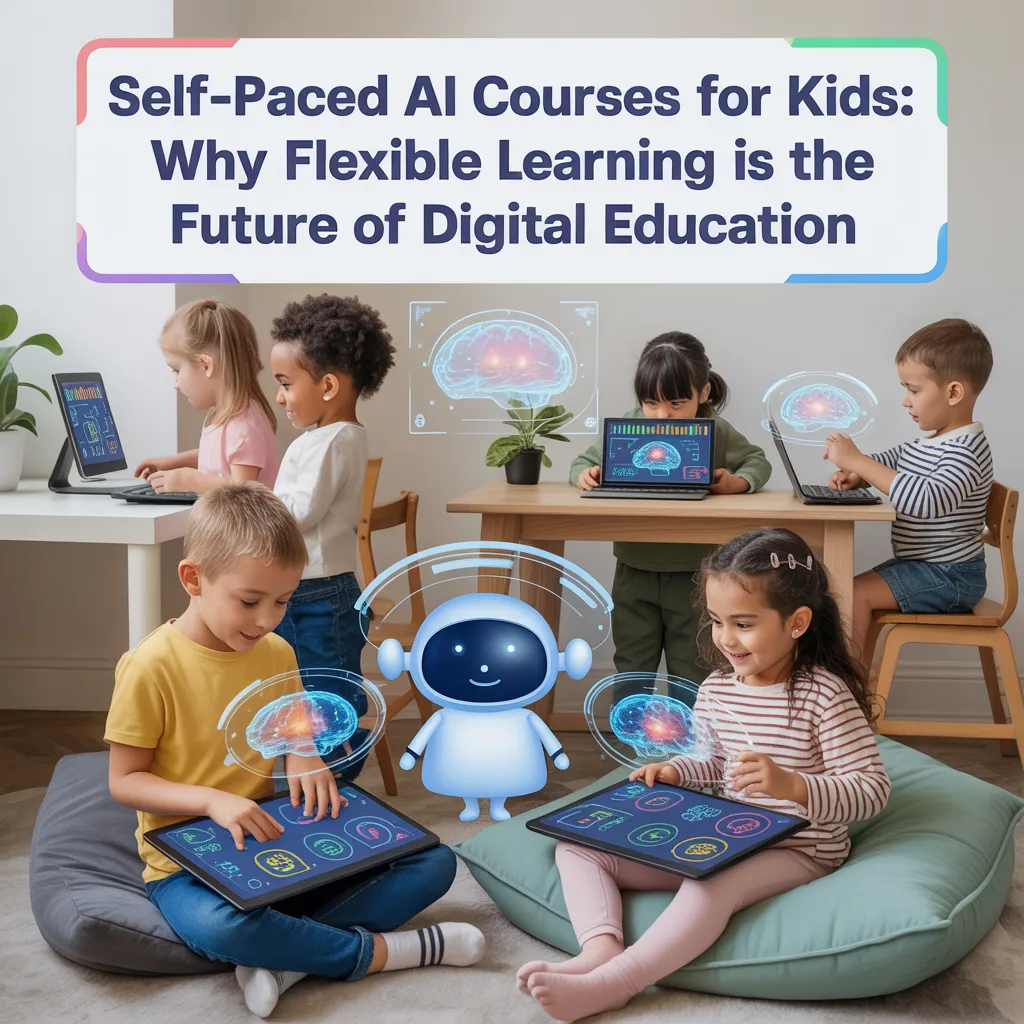
Not every child learns the same way — so why should every child learn on the same schedule? Self-paced AI courses are transforming how K-12 students build digital skills, giving young learners the freedom to explore artificial intelligence, coding, and computational thinking at a speed that matches their curiosity and ability.
With 30% of K-12 students already using AI tools daily and the global AI education market surging toward $112 billion by 2034, the question for parents and educators is no longer whether to teach kids about AI — it is how to teach them in a way that actually works.
The answer, increasingly, is self-paced learning. This article explores why self-paced AI courses are uniquely suited for K-12 students, what the best courses look like, and how platforms like Tech Your Way are making flexible AI education free and accessible for every student ages 8 to 17.
What Is Self-Paced Learning and Why Does It Matter for Kids?
Self-paced learning is an educational model that allows students to move through course material on their own timeline, without the constraints of a fixed class schedule or the pressure of keeping up with peers. Students can pause when they need more time with a concept, skip ahead when they already understand the material, and revisit lessons as many times as they need.
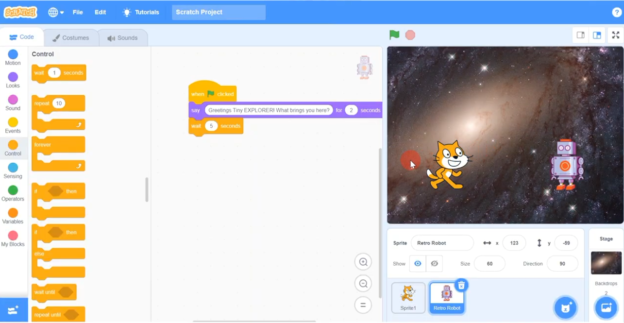
For AI education specifically, this model is transformative. Children arrive at AI and coding topics with wildly different levels of prior exposure. A 10-year-old who has been tinkering with Scratch coding since age 7 has very different needs than a 10-year-old encountering programming for the first time. Self-paced courses respect that reality instead of forcing both students into the same rigid timeline.
Research supports this approach. According to a Brandon Hall Group study on e-learning effectiveness, online self-paced learning requires 40% to 60% less time than traditional classroom instruction to cover the same material — not because it cuts corners, but because students eliminate the dead time spent waiting for classmates, repeating material they already know, or sitting through off-topic discussions.
For busy families juggling school, extracurriculars, and screen-time boundaries, that efficiency is a significant advantage.
The Benefits of Self-Paced AI Courses for K-12 Students
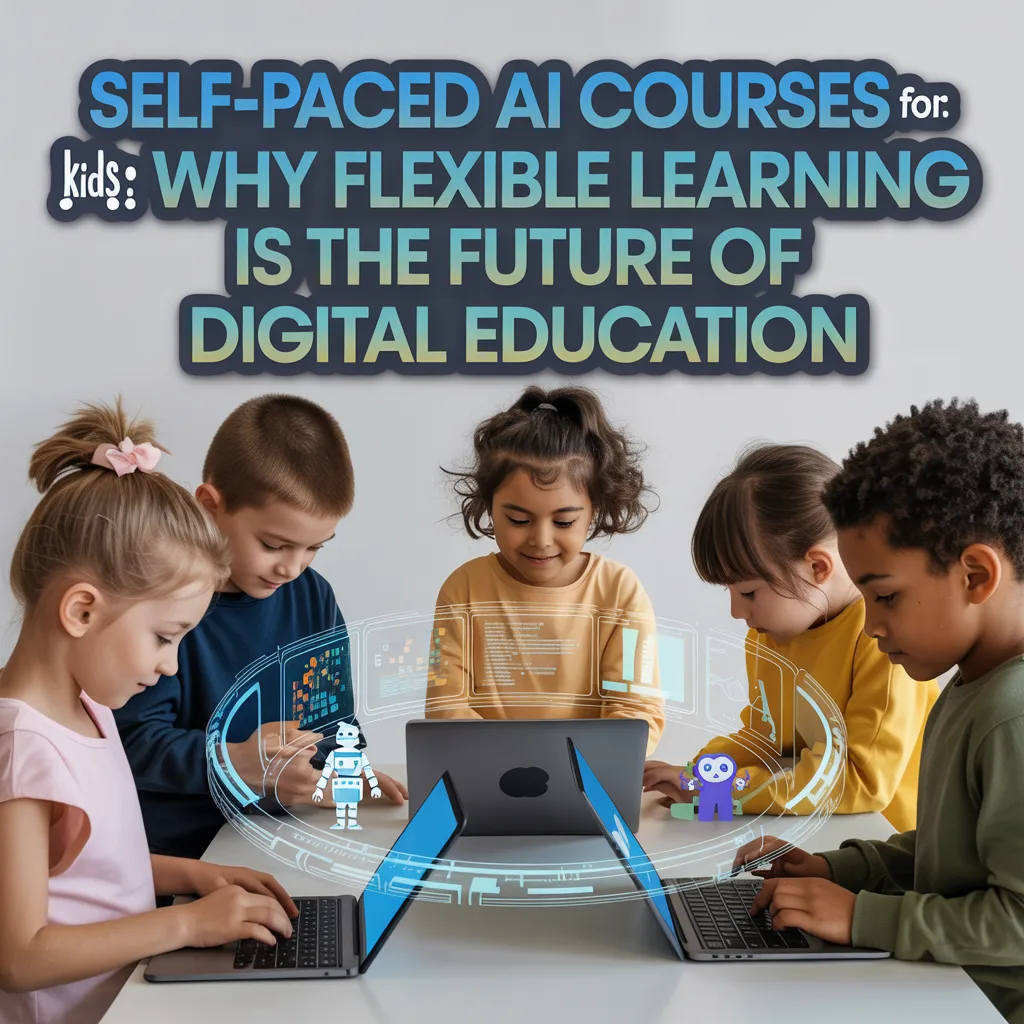
5 Reasons Self-Paced Learning Works for Young AI Learners
- Personalized pacing eliminates frustration and boredom. In a traditional classroom, faster learners grow bored while slower learners fall behind. Self-paced courses let each child move at the speed where they are challenged but not overwhelmed — the sweet spot where real learning happens.
- Students build ownership over their education. When a child decides when and how to engage with a lesson, they develop self-discipline, time management, and intrinsic motivation. These are the same social-emotional skills that predict long-term academic and career success.
- Flexible scheduling fits real life. Self-paced courses can be completed before school, after dinner, on weekends, or during summer break. There is no missed class, no falling behind, and no scheduling conflict with sports, music, or family time.
- Repetition without stigma. In a classroom, asking to hear a lesson again can feel embarrassing. In a self-paced course, replaying a video or retaking a quiz is simply part of the process. This is especially important for complex AI concepts like machine learning, data patterns, and algorithmic thinking.
- Accessible from anywhere. Whether a student is learning from a laptop at home, a tablet at a library, or a phone on a road trip, self-paced digital courses are available wherever there is an internet connection. Research from New Schools Venture Fund found that 96% of younger students find digital learning tools fun and engaging, which means the format itself helps sustain motivation.
What the Best Self-Paced AI Courses for Kids Include
Not all self-paced courses are created equal. The difference between a course that genuinely teaches AI literacy and one that simply puts a child in front of a screen comes down to instructional design. The best self-paced AI courses for K-12 students share several key characteristics.
Age-Appropriate Content Tiers
AI education must meet students where they are developmentally. A course designed for a high schooler will overwhelm an elementary student, and a course built for younger children will bore a teenager. The most effective platforms organize content into clear developmental tiers.
| Tier | Ages | What Students Learn | Example Courses |
|---|---|---|---|
| Early Learners | 8–10 | Block-based coding, pattern recognition, digital citizenship | Introduction to Scratch & Coding |
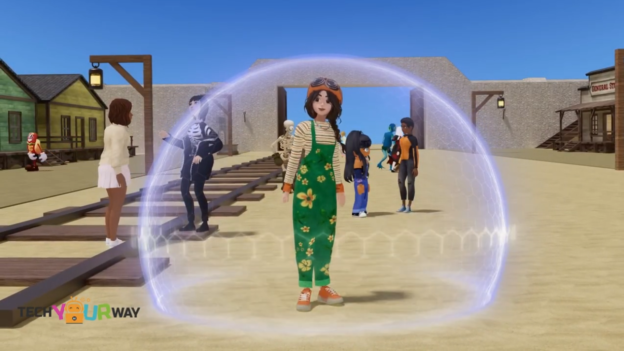
| Developing Learners | 11–13 | AI in everyday life, game development, internet safety | AI & Everyday Life, Cyber Smarts |
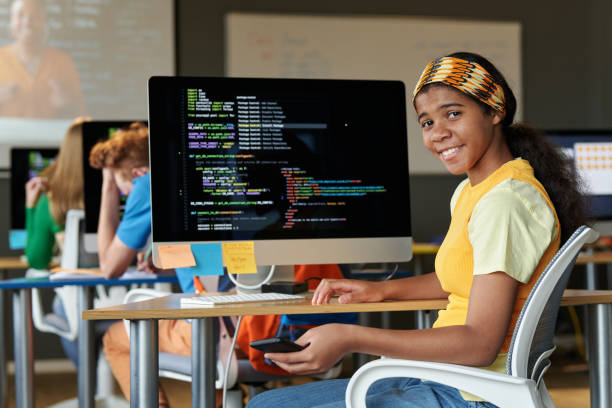
| Advanced Learners | 14–17 | Generative AI, prompt engineering, Python, career exploration | AI & ChatGPT for Teens |
Tech Your Way structures its entire course catalog around these three tiers — Early Learners (Elementary), Developing Learners (Middle School), and Advanced Learners (High School) — ensuring every student is matched with content that fits their readiness level.
Interactive Elements That Keep Students Engaged
Passive video watching is not self-paced learning — it is self-paced watching. Effective courses incorporate quizzes after each module, hands-on coding projects, creative challenges, and progress tracking dashboards that give students a visible sense of accomplishment. When a child can see that they have completed 60% of a course and earned badges along the way, they are far more likely to finish.
Certifications That Validate Learning
One of the most powerful motivators in self-paced education is the credential waiting at the finish line. Earning a course completion certificate gives students tangible proof of what they have learned — something they can add to a digital resume, share with teachers, or include in college applications. Organizations like USAII and Flint K-12 also offer dedicated AI certifications for young learners, further expanding the credentialing landscape.
Career Connection
The best self-paced courses do not teach skills in a vacuum. They connect what students are learning to real-world AI careers — from machine learning engineer and data scientist to AI ethics specialist and AI UX designer. When a student learning Scratch understands that they are building the same foundational logic used by professional software engineers, the lesson becomes more meaningful. Platforms that include a career discovery quiz take this a step further by helping students identify which AI career pathway matches their personality and interests.
How Self-Paced Learning Compares to Other Models
Parents and educators often weigh self-paced courses against other formats. Each model has strengths, but for AI education — especially for K-12 students with varying schedules and skill levels — self-paced learning offers distinct advantages.
| Feature | Self-Paced Courses | Live Instructor-Led Classes | In-School AI Curriculum |
|---|---|---|---|
| Schedule flexibility | Learn anytime, anywhere | Fixed class times | Fixed school hours |
| Pacing | Student-controlled | Instructor-controlled | Curriculum-controlled |
| Cost | Often free or low-cost | Typically $100–$500+ per course | Funded by school district |
| Accessibility | Internet connection only | Requires live attendance | Requires school enrollment |
| Personalization | High — students choose their path | Moderate — some Q&A | Low — one pace for all |
| Certification | Often included | Sometimes included | Rarely included |
| Availability | Immediate | Enrollment windows | Depends on district adoption |
The reality is that only 7% of schools worldwide currently offer formal AI guidance, and just one in three educational institutions provide any AI training at all. For the vast majority of K-12 students, self-paced online courses are not a supplement to school-based AI education — they are the primary path to AI literacy.
How Parents and Educators Can Support Self-Paced Learners
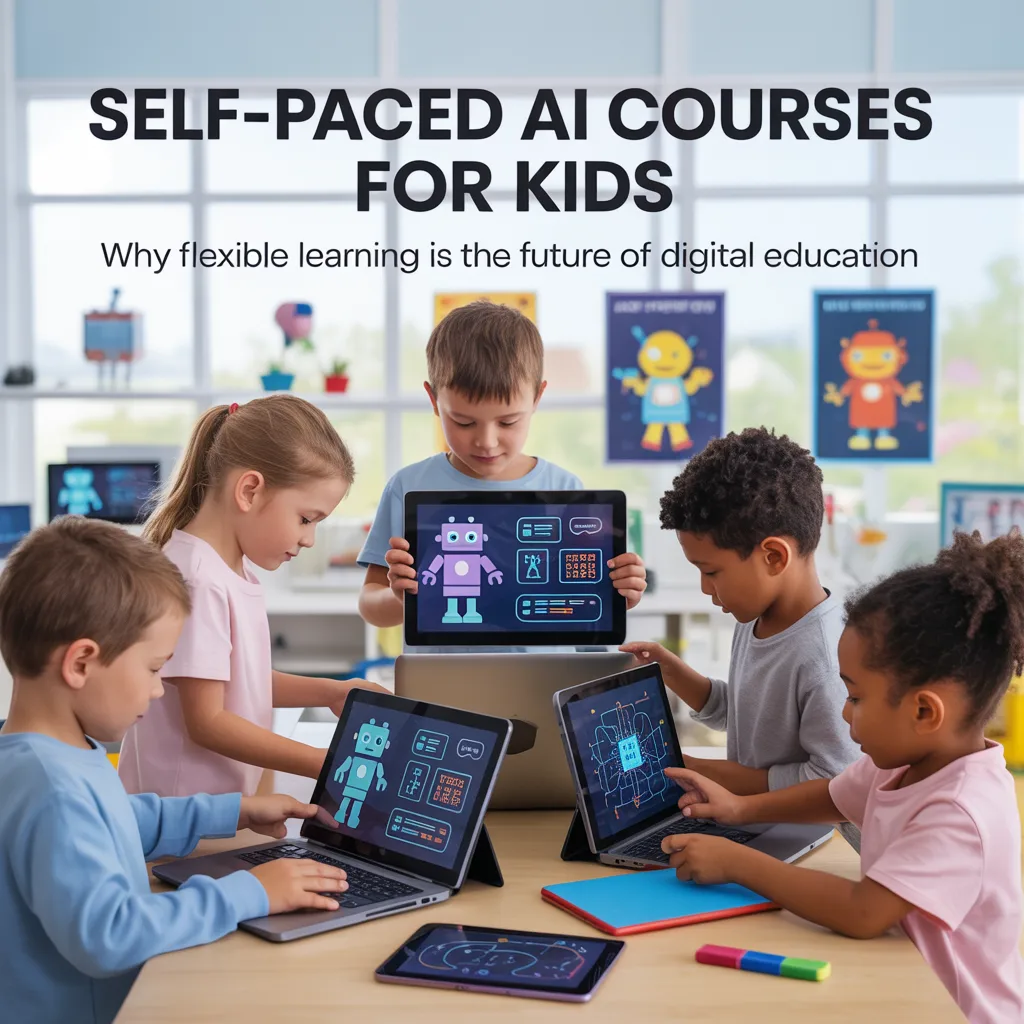
Self-paced does not mean unsupported. While the format empowers students to learn independently, parents and educators play a vital role in creating the conditions for success.
Set a consistent learning routine. Even though the course is flexible, establishing a regular time — such as 20 minutes after homework or Saturday mornings — helps younger students build the habit of showing up for their learning.
Celebrate milestones. When a child completes a module, earns a badge, or finishes a course, acknowledge it. These moments of recognition reinforce the intrinsic motivation that self-paced learning depends on.
Ask questions about what they are learning. Engagement does not require technical expertise. Simply asking “What did you learn about AI today?” or “Can you show me what you built in Scratch?” signals that their learning matters.
Use career exploration as motivation. Connecting coursework to future possibilities keeps students engaged over the long term. Tech Your Way’s AI Career Quiz is a quick, fun way to help a child see where their current learning could lead.
According to a 2026 Penn Foster survey, parents of Gen Z students are increasingly prioritizing digital skills and certifications alongside traditional education paths. Self-paced AI courses offer a practical, low-risk way for families to act on that priority — without waiting for schools to catch up.
Frequently Asked Questions (FAQ)
Are self-paced AI courses effective for younger children?
Yes. When courses are designed with age-appropriate content, visual interfaces, and interactive elements, children as young as 8 can learn foundational AI and coding concepts effectively. Platforms like Tech Your Way specifically design their Early Learners courses for elementary-age students, using tools like Scratch that make abstract concepts tangible and fun.
How long does it take a child to complete a self-paced AI course?
Completion time varies based on the course and the student’s pace. Most introductory courses can be completed in 2 to 6 weeks with 15 to 30 minutes of daily practice. The beauty of self-paced learning is that there is no deadline — students can take longer if they need to or finish faster if they are motivated.
Do self-paced courses offer certificates?
Many do. Tech Your Way offers course completion certificates that students can use to build a digital resume. External programs like the USAII’s CAIP certification and Flint K-12’s AI Literacy program also provide credentials specifically for K-12 students.
Are there free self-paced AI courses for kids?
Yes. Tech Your Way is a nonprofit organization that provides all of its self-paced AI and digital skills courses completely free for students ages 8 to 17. Other free resources include Code.org’s AI curriculum and AI4K12’s online courses.
How do I know which course is right for my child?
Start with your child’s age and experience level. Elementary students should begin with visual, block-based tools like Scratch. Middle schoolers can explore AI concepts and game development. High schoolers are ready for generative AI, Python, and career-focused content. If you are unsure, Tech Your Way’s career quiz can recommend a personalized learning path in under a minute.
Give Your Child the Gift of Learning on Their Terms
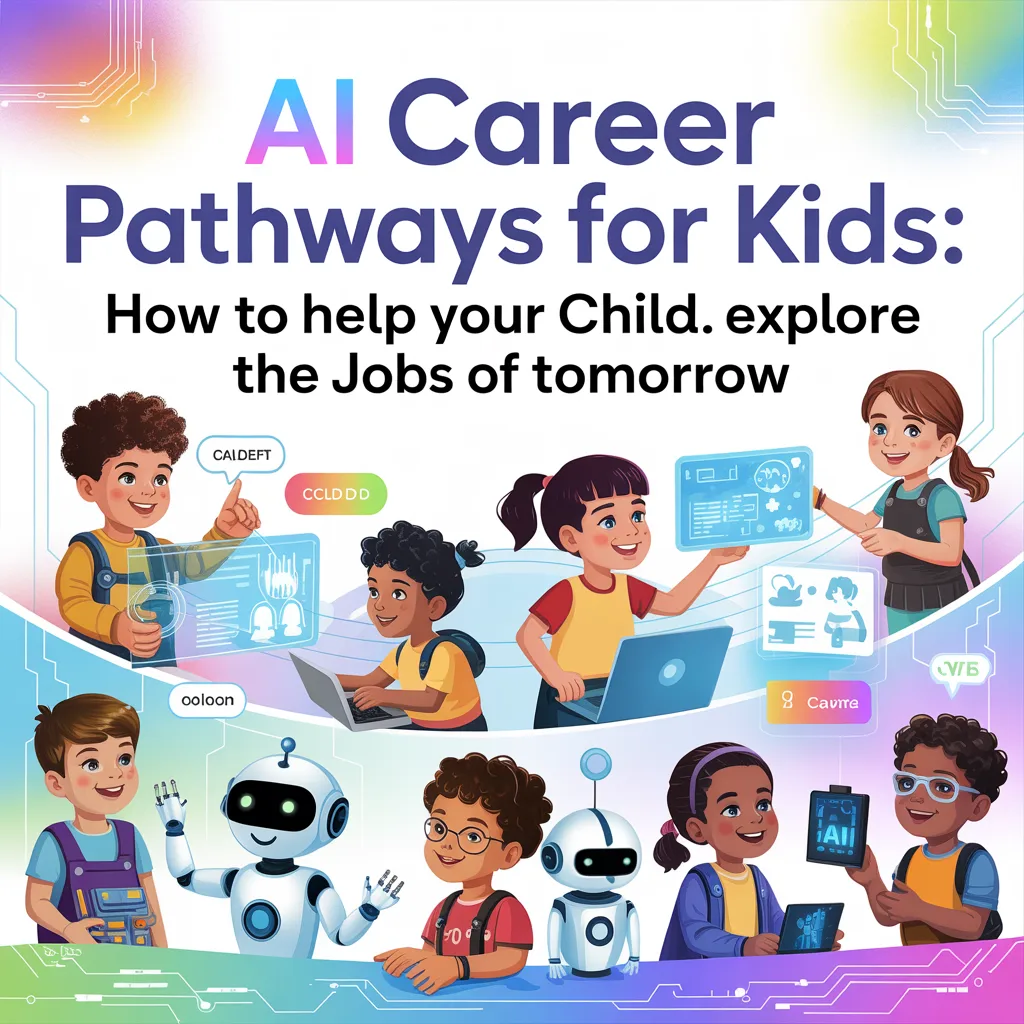
Self-paced AI courses represent the most accessible, flexible, and effective way for K-12 students to build the digital skills they will need for the future. In a world where 82% of students already recognize that AI skills are essential and the AI job market is growing at over 36% annually, giving children the opportunity to learn AI on their own terms is one of the most impactful investments a parent or educator can make.
Tech Your Way makes that investment free. As a nonprofit platform delivering self-paced AI and coding courses to students ages 8–17, Tech Your Way is on a mission to reach over 50,000 students and ensure that every young person — regardless of background — has the tools to thrive in an AI-powered world.
Browse all courses | Find your child’s tech path | Support free AI education


Responses